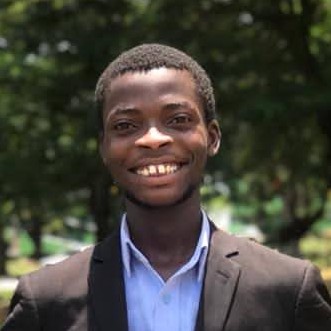
Mathematician  ·  causal machine learning researcher

Stephen Maranatha
Asiedu

I design machine-learning methods that are provably correct, computationally scalable, and explainable enough to trust — mostly at the intersection of causal inference and high-dimensional statistics. PhD researcher at King's College London (UKRI Safe & Trusted AI), visiting researcher at Imperial College London, and a mathematician by training.

Kumasi → London First Class, KNUST Lecturer, Solent University
Stephen Maranatha Asiedu
01 — About

Structure is how I make sense of things.

I came to machine learning through mathematics. I read Mathematics at KNUST in Ghana, graduating top of my class, and the habits stuck: I want methods with guarantees, arguments that close, and results that survive a hard simulation study.

Today I'm a PhD researcher in King's College London's Distributed AI group, aligned with the UKRI Centre for Doctoral Training in Safe & Trusted AI, a visiting researcher at Imperial, and supervised by David Watson. My research asks how far we can push causal machine learning — recovering cause and effect from observational data — while keeping it scalable and interpretable enough for science and the clinic.

Outside research I lecture at Solent University, tutor computer science and mathematics, and spend my own time on music, writing, and design. I care about explaining hard ideas simply — in a lecture theatre or on a page.

02 — Research

Four threads, one question: what is actually causing what?

Causal discovery & structure learning

Constraint-based algorithms that recover causal graphs from data, with proofs of soundness and completeness — and complexity low enough to actually run.

High-dimensional statistical inference

Conditional-independence and hypothesis testing, multiple-testing correction, and Monte Carlo study design in the regime where variables vastly outnumber samples.

Trustworthy & explainable ML

Treating interpretability and auditability as requirements, not decoration — so a model's claims can be checked by the scientist relying on them.

Applications: genomics & precision medicine

Resolving direction between genetic variants and molecular traits — the setting for my current work — toward biomarker discovery and stratified medicine.

Methods I work in day to day:

Causal inference Conditional-independence testing Monte Carlo simulation studies Multiple-testing correction Regression Convex & combinatorial optimisation Numerical methods Complexity analysis HPC · SLURM R Python — numpy / pandas / scikit-learn MATLAB · SQL · Bash
03 — Publications

Selected research

Preprint  ·  under review, Bioinformatics (2026)

Causal ASCEND: Scalable Two-Tier Causal Discovery on High-Dimensional Data

Stephen Asiedu, David Watson

Exploits the tiered structure of biological systems — upstream regulators flowing to downstream effects — to run causal discovery at genome scale. By maintaining dynamically updated ancestral conditioning sets it reaches polynomial-time complexity where classical methods blow up exponentially. Validated over an 81-condition simulation grid (n up to 131,072) with paired Wilcoxon signed-rank tests and Benjamini–Hochberg correction; 27×–5,297× runtime speedups over the state-of-the-art baseline.

soundness · completeness 27×–5,297× faster
ICLR 2025 Workshop  ·  MLGenX, Singapore

Multi-Omic Causal Discovery using Genotypes and Gene Expression

Stephen Asiedu, David Watson

GENESIS uses genotypes as fixed causal anchors — variables that precede expression in the causal order — to give classical causal discovery a principled head start, iteratively classifying relationships as direct, indirect or non-causal through independence testing while handling latent confounding. Provably sound, with complexity; benchmarked against FCI and GES.

constraint-based vs. FCI, GES
Undergraduate research (KNUST)  ·  Ghana Data Science Summit — IndabaX, Accra, 2022

Real-Time Traffic Density Estimation for Dynamic Traffic Lights

Stephen Asiedu — Undergraduate Research Experience for Mathematics Students

My first research project: using machine learning for road-user tracking and live density estimation from traffic camera feeds, then feeding those estimates into adaptive signal timings to cut waiting time at intersections. Implemented in Python. Selected for presentation at IndabaX Ghana 2022, and the work earned a Google Travel Grant.

Python object tracking · density estimation adaptive control
04 — Teaching

I teach as much as I research.

Machine learning, mathematics and computer science, from first-year undergraduates to A-level students.

  • Lecturer, Solent University London (QA Higher Education) — Mathematics for Computer Science and Cyber Security, plus machine learning, for undergraduate cohorts. Jul 2025 – present.
  • Scholars Programme tutor, The Brilliant Club — designed and delivered Key Stage 3 & 4 computer-science courses across four London schools. 2024–2025.
  • A-level AQA Computer Science tutor, Upward Tuition — one-to-one exam preparation. 2024 – present.
  • Research & Teaching Assistant, KNUST — calculus, differential equations, scientific and high-performance computing. 2022–2023.
05 — Experience

Timeline

Lecturer
Solent University, London (QA Higher Education)
Mathematics for Computer Science & Cyber Security, and machine learning — alongside doctoral research.
Jul 2025 — present
PhD Researcher, Computer Science
King's College London — Distributed AI · UKRI Safe & Trusted AI CDT
Visiting researcher, Imperial College London (Nov 2024 – present).
Feb 2024 — Dec 2027
Software Developer
Adepts Ltd, Ghana
Production Python / PostgreSQL backend services on Linux.
Oct 2023 — Jan 2024
Research & Teaching Assistant
KNUST, Ghana
Calculus, differential equations, scientific & high-performance computing.
Nov 2022 — Oct 2023
Data Science Intern
Werld Analytics, Kumasi
Client dataset analysis and data-driven reporting for quantitative research.
Nov 2021 — Feb 2022
06 — Honours & service

Awards, review & community

Awards

  • 3rd place, Fetch.ai Hackathon (Moderna × Imperial I-X), Dec 2024 — built the retrieval-augmented agent for a data-driven vaccine-hesitancy tool.
  • 13th place, Deep Learning Indaba 2023 — ML for Genomics Hackathon.
  • Best in Show & Most Collaborative Team, CodeDay Kumasi, 2022.
  • Google Travel Grant, Ghana Data Science Summit (IndabaX) 2022 — awarded for research.
  • GNPC Foundation Scholarship, 2018–2022 — national merit award.
  • 1st place, KNUST Mathematics & Statistics interdepartmental quiz, 2020.

Peer review

  • Reviewer, NeurIPS 2024 & 2025.
  • Reviewer, AISTATS 2024.

Service & community

  • Co-organiser, KCL Distributed AI research seminars — running the group's biweekly seminar series since Nov 2024.
  • Aligned Doctoral Student, UKRI CDT in Safe & Trusted AI — contributing to standards for safe, trustworthy AI research.
  • Registrations volunteer, Deep Learning Indaba 2023.
  • Mentor, Black Code Foundation — training and mentoring web developers, 2022.
  • Youth Engagement Center Advisory Board Member — Advised and organised youth centered entrepreneural and skills developments seminars with funding from UNICEF
  • Mentor, Black Code Foundation — training and mentoring web developers, 2022.
  • Mathematics teaching volunteer — Ayeduase government schools and the Kids & Math Foundation, motivating young people out of maths anxiety.
  • Editor-in-Chief, Association of Mathematics Students, KNUST, 2020–2021.
07 — Beyond research

Off the clock

I'm a Christian and host a solo podcast, Personal Christianity. I am a creative: write poetry, love arts and compose music.

08 — Contact

Open to quant research roles and research collaborations.